Contactos Links Homepage Mapa
Imagem da Secção
Rota de Vinhos da Península de Setúbal

SETÚBAL PENINSULA WINES 


HISTORICAL APPOINTMENT

The Setúbal Peninsula is a region where the high quality of the Regional Terras do Sado, DOC (Designation of Origin) Palmela and DOC Setúbal wines is also proven through awards obtained at national and international competitions.

The Arabs, a people deeply connected with agriculture who occupied the Tagus-Sado Peninsula over a few centuries, considerably developed viticulture although their religion doesn't permit consumption of alcohol. With the founding of the kingdom of Portugal came the Franks, a people steeped in viticulture tradition.
 
In 1185 when Portugal received its first foral (royal charter) attributed by D.Afonso Henriques, first King of Portugal, in which vine and wine are mentioned so confirming its viticulture tradition.
 
It's unknown when vine was first cultivated in the Arrabida, however we do know that the Greeks and Phoenicians planted some grape varieties brought from the Middle East, as the climate was considered amenable and the ground of the slopes of the Arrabida good for the cultivation of wine.
 
England imports wine from Portugal in 1381 and King Richard II mentions the importation of wine from Setúbal. There are references to the exportation of 350 barrels of Moscatel de Setúbal in 1675.
 
In concluding a study of Estremadura in his 6th Wine Conference on September 9th 1875, Ferreira Lapa refers to the "notable and important wine producing region of Setúbal, the priviledged region of Muscat with a reputation in Europe and a name made in Portugal where very few names are made."
 
The Setúbal Peninsula is a pioneering region in the elaboration of viticultural products of recognized quality, such as the fortified Muscat wine whose area of production has been delineated since 1908 although production did in fact begin much earlier. It should be mentioned that a century of the Designated Region of Moscatel de Setúbal was commemorated in 2008.
 
The Setúbal Peninsula Region unfolds into three distinct designations:

 •  Palmela D.O.C. (Designation of Origin - Palmela)
•  Setúbal D.O.C. (Designation of Origin - Setúbal)
•  Península de Setúbal, Vinho Regional (ex-Terras do Sado Regional Wine)

The red grape predominates in the region with about 80% of the total vine varieties, with special reference to the municipality of Palmela. The predominant grape variety is Castelão, however in addition to the other national grape varieties the introduction of Chardonnay, Cabernet Sauvignon, Merlot, Syrah, Cabernet Blanc, Pinot Noir and Pinot Blanc among others stand out.

 The most represented white grape varieties of the region are Fernão Pires and Moscatel de Setúbal which is used to produce fortified wine of the same name.


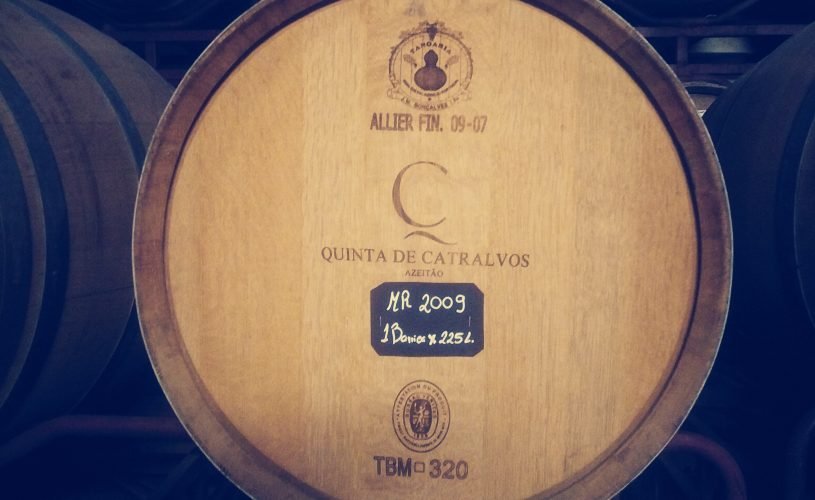
MOSCATEL DE SETÚBAL 
 
Protected Designation of Origin
 
The Muscat grape variety originated from Egypt and spread through the Mediterranean from Alexandria, possibly at the time of the Roman Empire (Galet, 1985). It is a grape variety of dual purpose: a table grape as well as being the basis of the prestigious fortified Moscatel de Setúbal wine.

Wines eligible to use the Setúbal Protected Designation of Origin are produced in a region demarcated by the municipalities of Palmela, Setúbal and part of the civil parish of Nossa Senhora do Castelo of the municipality of Sesimbra.

There are two types of Muscat: white which is made from the Moscatel de Setúbal grape variety, and purple made from the Moscatel Roxo grape variety. Wines may only be called Moscatel de Setúbal and Moscatel Roxo when they contribute at least 85% of the respective unfermented grape juice used.
 
This fortified wine is characterised by its special qualities of singular and unmistakable aromas and flavours. 2008 saw the celebration of the Moscatel de Setúbal Designation of Origin centenary.